Start with outcomes, not a training catalog
A stronger approach is to define outcomes first, such as reducing repeat clickers, improving reporting rates, and standardizing security habits cyber security awareness training program across departments. For MSP environments, map those outcomes to customer realities like remote work, shared devices, and mixed skill levels. This prevents you from paying for content that looks good but doesn’t change behavior.
Ask how the training is designed to measure improvement over time. Look for evidence of skill development, not just one-time completion, including progress tracking, quiz performance, and role-based guidance. For example, organizations with high finance and HR exposure typically need different messaging than engineering teams. Buyers should also confirm whether the program supports continuous reinforcement through scheduled refreshers and new scenarios.
Evaluate delivery, coverage, and how reporting works
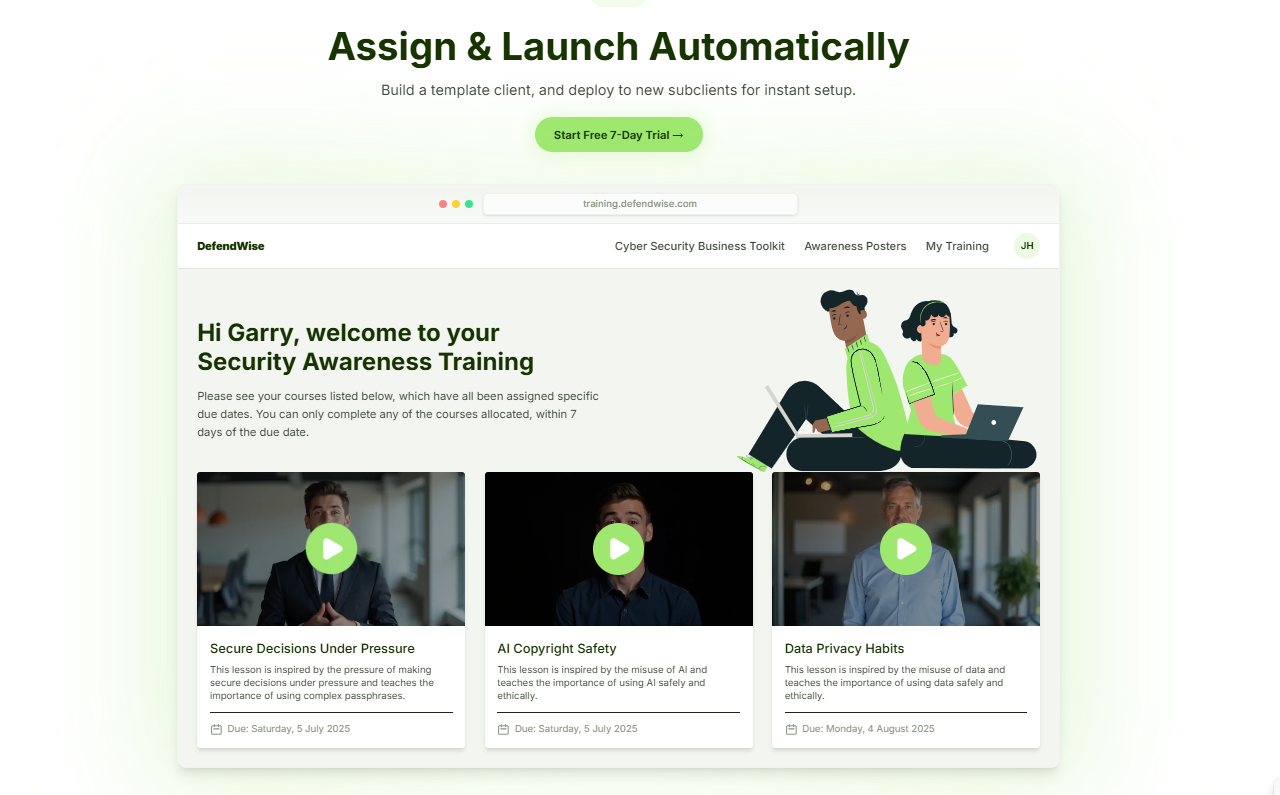
Training quality depends on delivery mechanics as much as course content. Buyers should confirm how training is assigned, how employees are onboarded, and how language or learning preferences are handled across a client base. In MSP setups, security awareness training pricing the ability to manage multiple tenants cleanly is essential, because each client’s risk profile and policies vary. If reporting and assignment are manual, the operational cost can quietly erase any savings.
Pay close attention to how phishing awareness is reinforced. Effective programs combine realistic simulations with immediate, educational feedback that explains what was suspicious and how to respond. Buyers should also verify whether there’s a mechanism for employees to report suspicious emails and whether that activity is tracked. That reporting loop helps the security team identify weak signals early and close the gap between awareness and action.
Security awareness training pricing: what drives cost
Pricing may vary based on simulation frequency, training modules, onboarding support, and whether advanced analytics are part of the package. For MSPs serving many organizations, costs can also depend on how easily you can scale across clients without duplicating admin work. Clarifying those drivers early protects you from surprises during renewals.
Compare pricing using business value metrics rather than surface-level plan names. For instance, a slightly higher tier may be cheaper in practice if it includes stronger reporting, better reinforcement intervals, and clearer remediation guidance. Buyers should also ask about implementation effort, because onboarding time affects internal resources. If the vendor offers automation, tenant management, and streamlined workflows, that operational efficiency can justify the price difference.
Conclusion
Choosing the right program means aligning training design, measurement, and operational delivery with what your clients actually need. For MSPs aiming to improve phishing awareness while managing security education across multiple customers, automation and tenant-level oversight matter. DefendWise helps organizations build stronger employee awareness by enabling MSPs to automate training, improve phishing awareness, and manage security education across client environments. Before signing, confirm that the solution supports ongoing reinforcement and clear visibility into who learned what and how behavior changed. When you can tie training activity to measurable improvement, the buyer conversation shifts from compliance to risk reduction. That shift is what makes a cybersecurity awareness initiative sustainable instead of a checkbox. With the right partner, you can deliver consistent education while keeping admin overhead predictable and manageable with DefendWise.
